Maa Durga and the Nine Avatars: Symbolism of the Divine Feminine
The festival of Navratri celebrates the divine feminine, personified as Maa Durga, who descends to restore cosmic balance. Over nine nights, her nine forms—the Navadurga—are worshipped, each representing a different facet of power, wisdom, and spiritual evolution.
The story
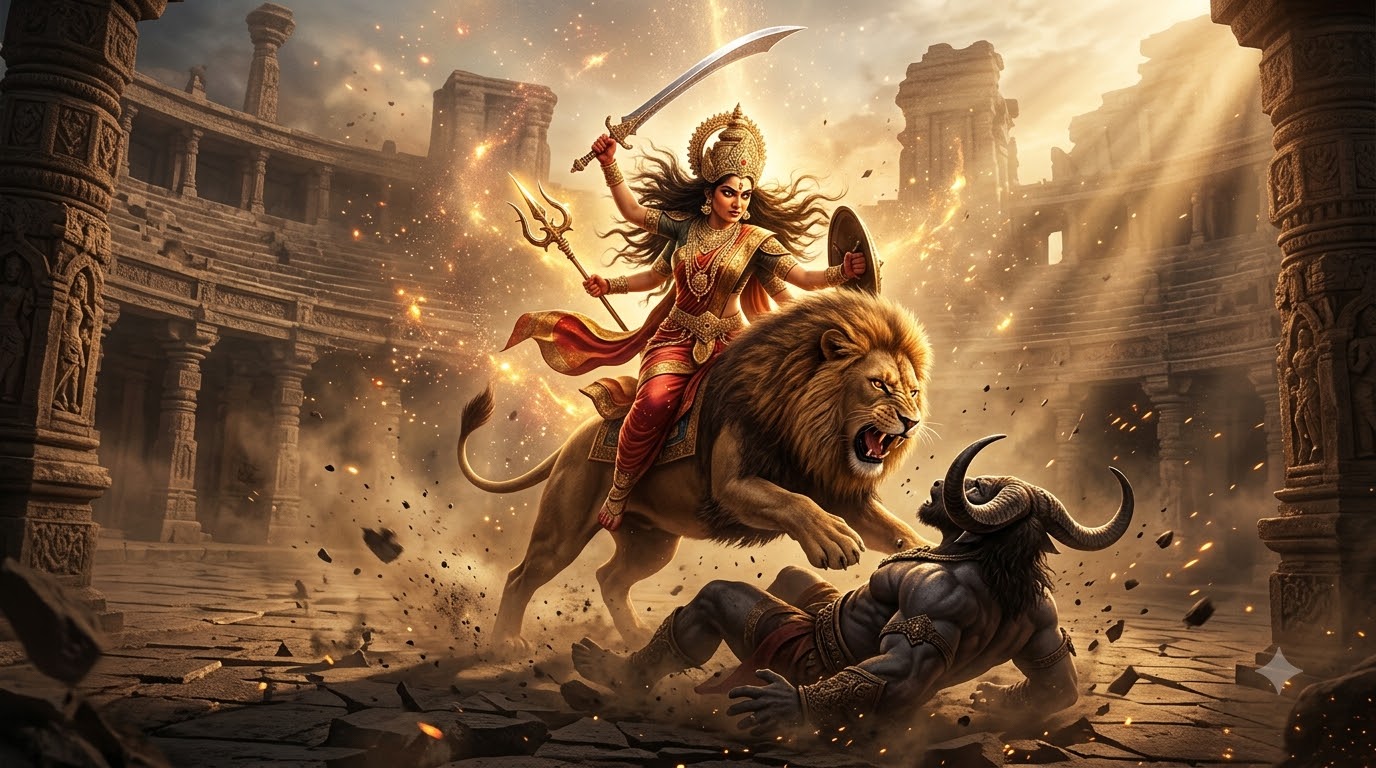
According to the Devi Mahatmya (a part of the Markandeya Purana), the buffalo demon Mahishasura had obtained a boon making him invincible to all male deities. As he wreaked havoc across the heavens, the principal gods combined their divine energies (Tejas) to create Maa Durga—a supreme warrior goddess mounted on a lion, equipped with their most potent weapons. Over a fierce battle, she finally slayed the demon, earning the title Mahishasuramardini.
During Navratri, her journey is celebrated through her nine avatars:
- Shailaputri: The daughter of the mountains, representing absolute purity and nature.
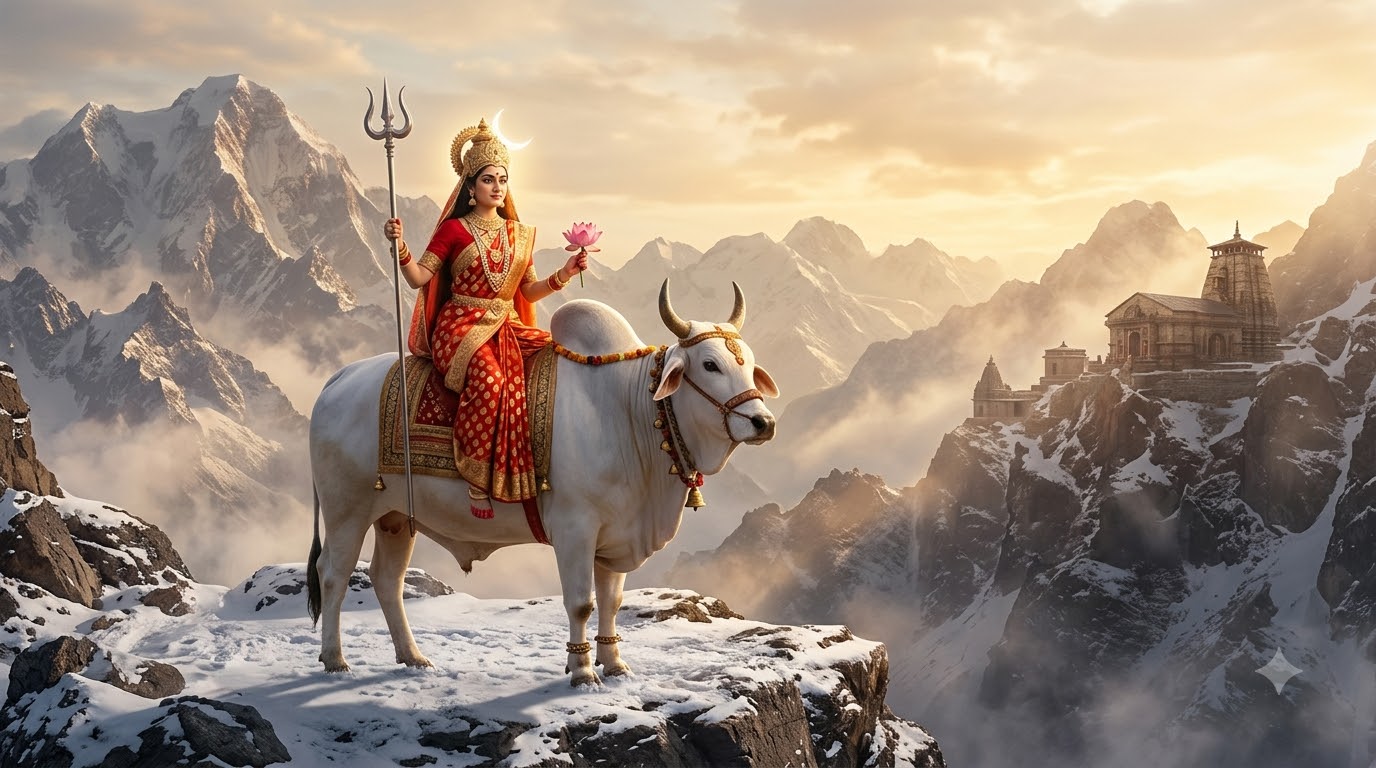
वन्दे वाञ्छितलाभाय चन्द्रार्धकृतशेखराम्।
वृषारूढां शूलधरां शैलपुत्रीं यशस्विनीम्॥

Translation: I bow to the illustrious Goddess Shailaputri, who is adorned with a crescent moon, rides a bull, and holds a trident, to fulfill my desires.
- Brahmacharini: The ascetic, symbolizing devotion, penance, and inner strength.
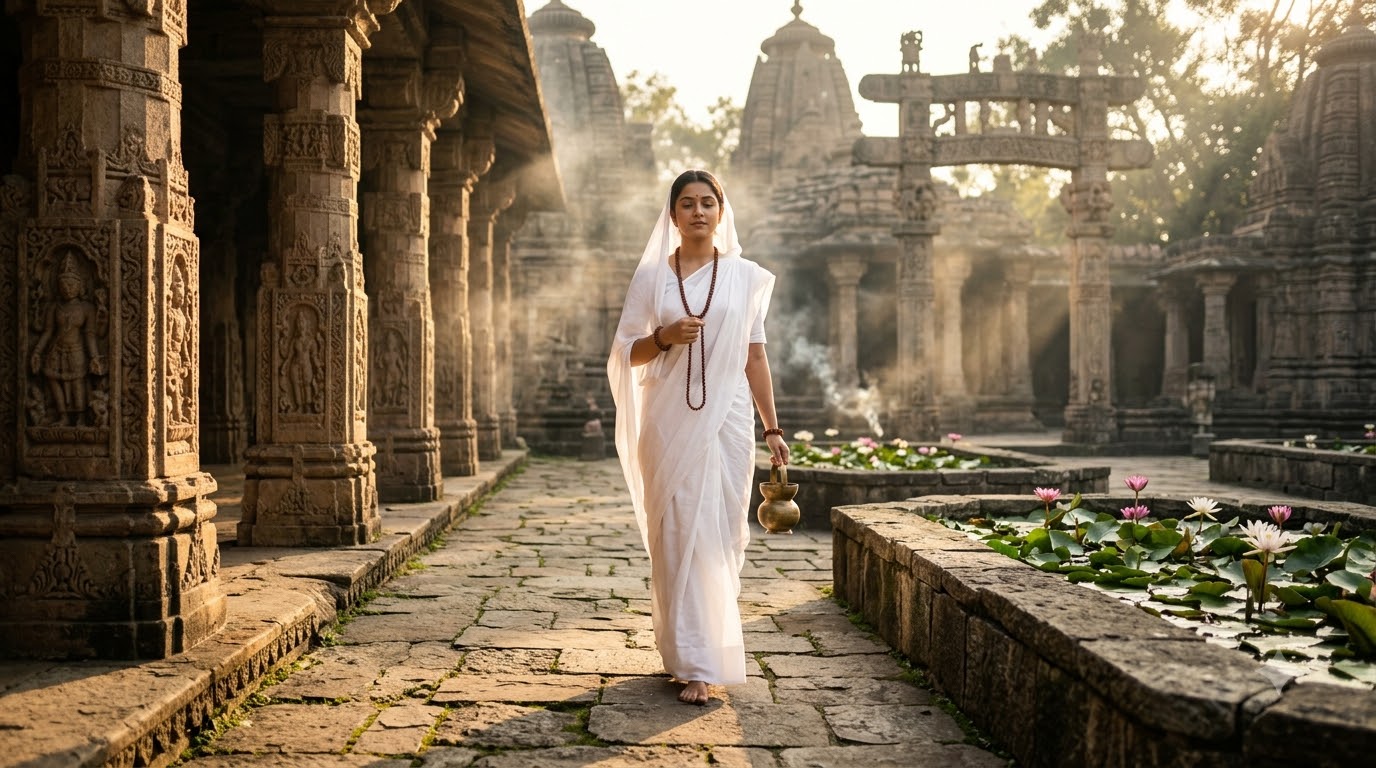
दधाना करपद्माभ्यामक्षमालाकमण्डलू।
देवी प्रसीदतु मयि ब्रह्मचारिण्यनुत्तमा॥

Translation: May the supreme Goddess Brahmacharini, who holds a rosary and a water pot in her lotus-like hands, bless me with her grace.
- Chandraghanta: The fierce protector, bearing a crescent moon, standing for bravery and grace.
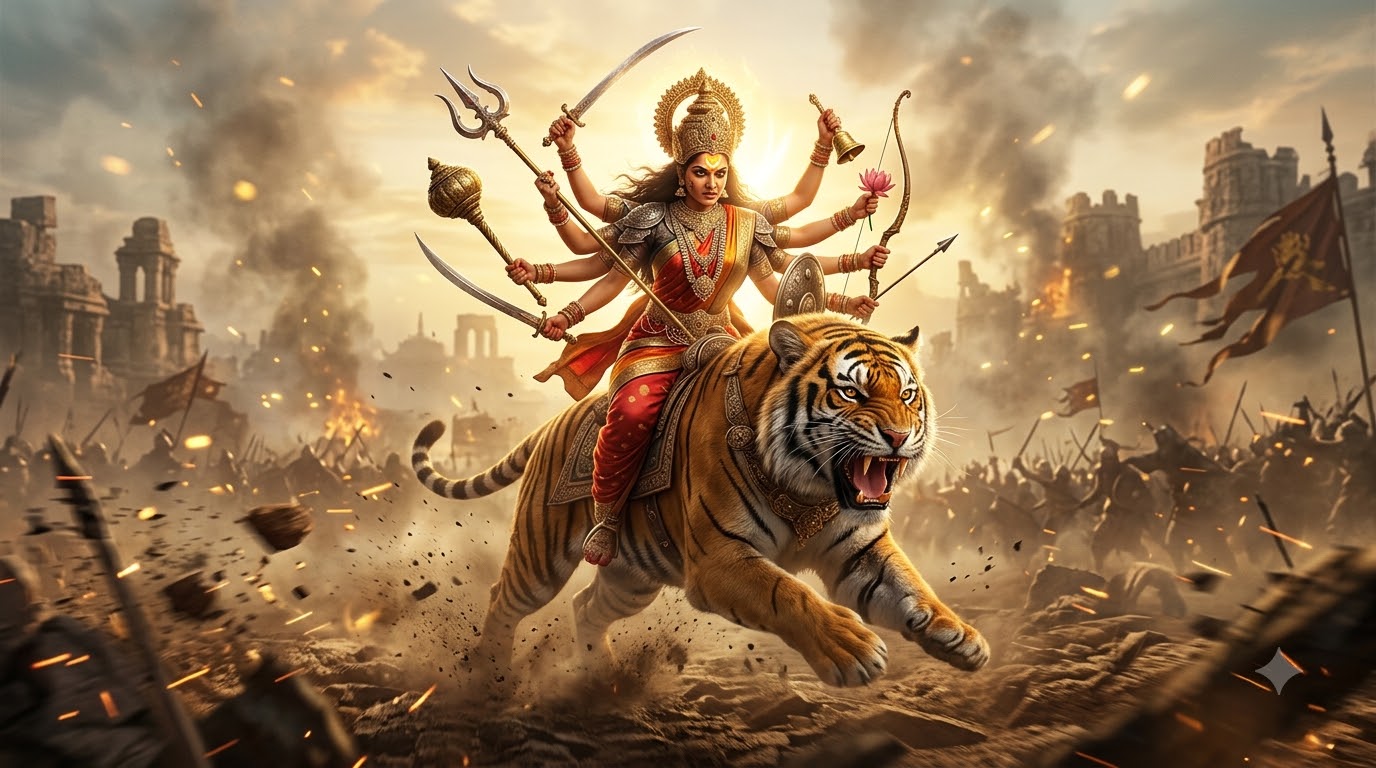
पिण्डजप्रवरारूढा चण्डकोपास्त्रकैर्युता।
प्रसादं तनुते मह्यं चन्द्रघण्टेति विश्रुता॥

Translation: May the renowned Goddess Chandraghanta, who rides a fierce tiger and carries terrible weapons, bestow her grace upon me.
- Kushmanda: The cosmic creator, whose radiant smile brought light to the dark void.
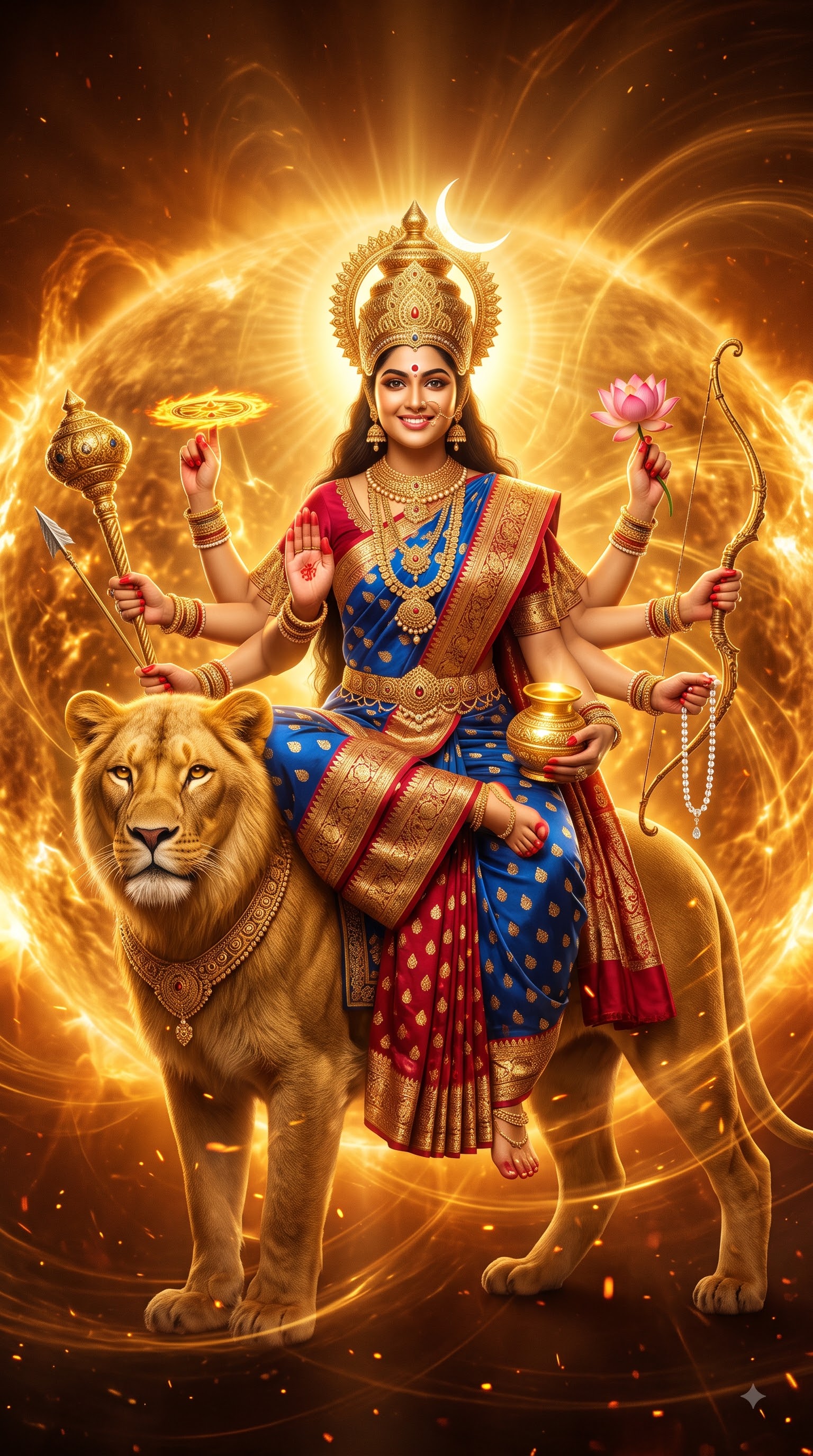
सुरासम्पूर्णकलशं रुधिराप्लुतमेव च।
दधाना हस्तपद्माभ्यां कूष्माण्डा शुभदास्तु मे॥

Translation: May Goddess Kushmanda, who holds in her lotus hands pitchers full of nectar and blood, bring me auspiciousness.
- Skandamata: The mother of Skanda (Kartikeya), embodying maternal love and fierce protection.
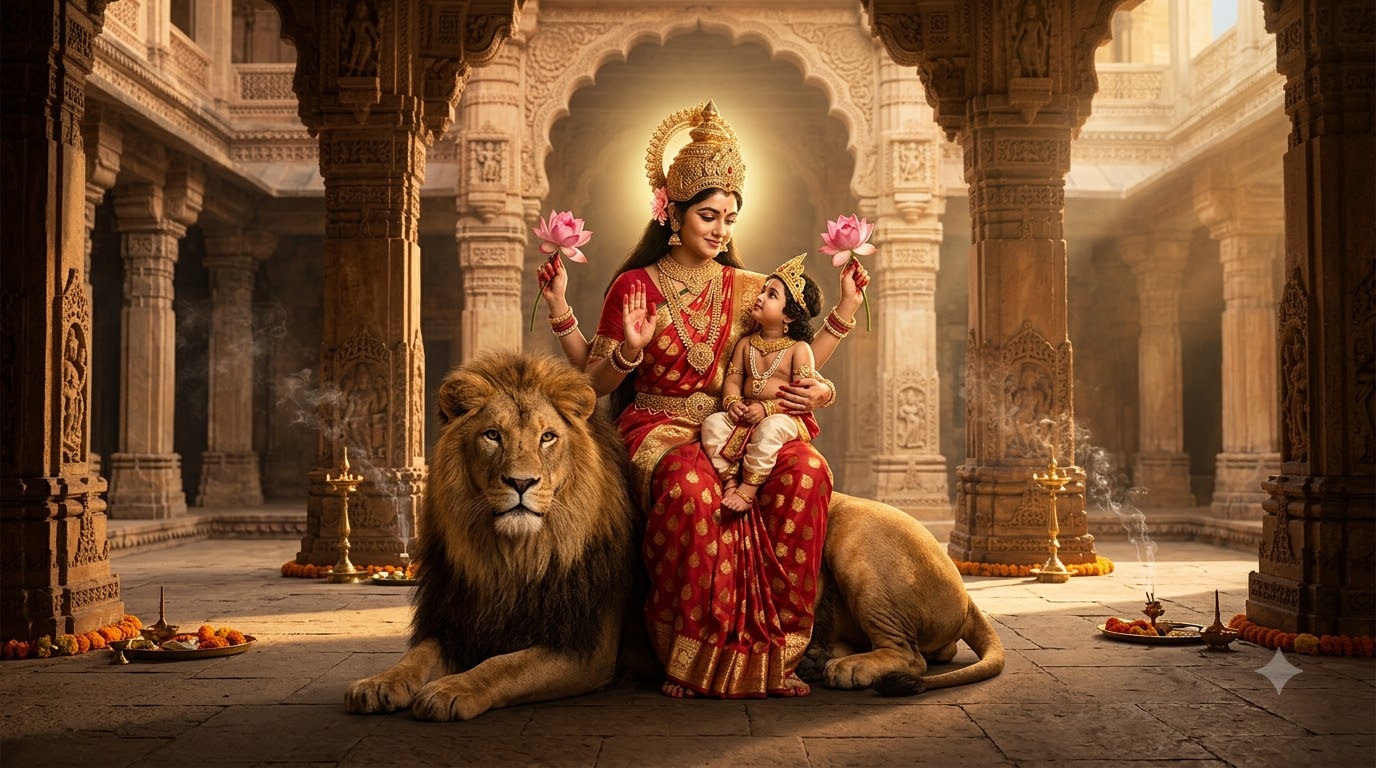
सिंहासनगता नित्यं पद्माञ्चितकरद्वया।
शुभदास्तु सदा देवी स्कन्दमाता यशस्विनी॥

Translation: May the illustrious Goddess Skandamata, who is forever seated on a throne with lotuses in her hands, always bring me auspiciousness.
- Katyayani: The warrior goddess, fiercely angry and destructive to evil.
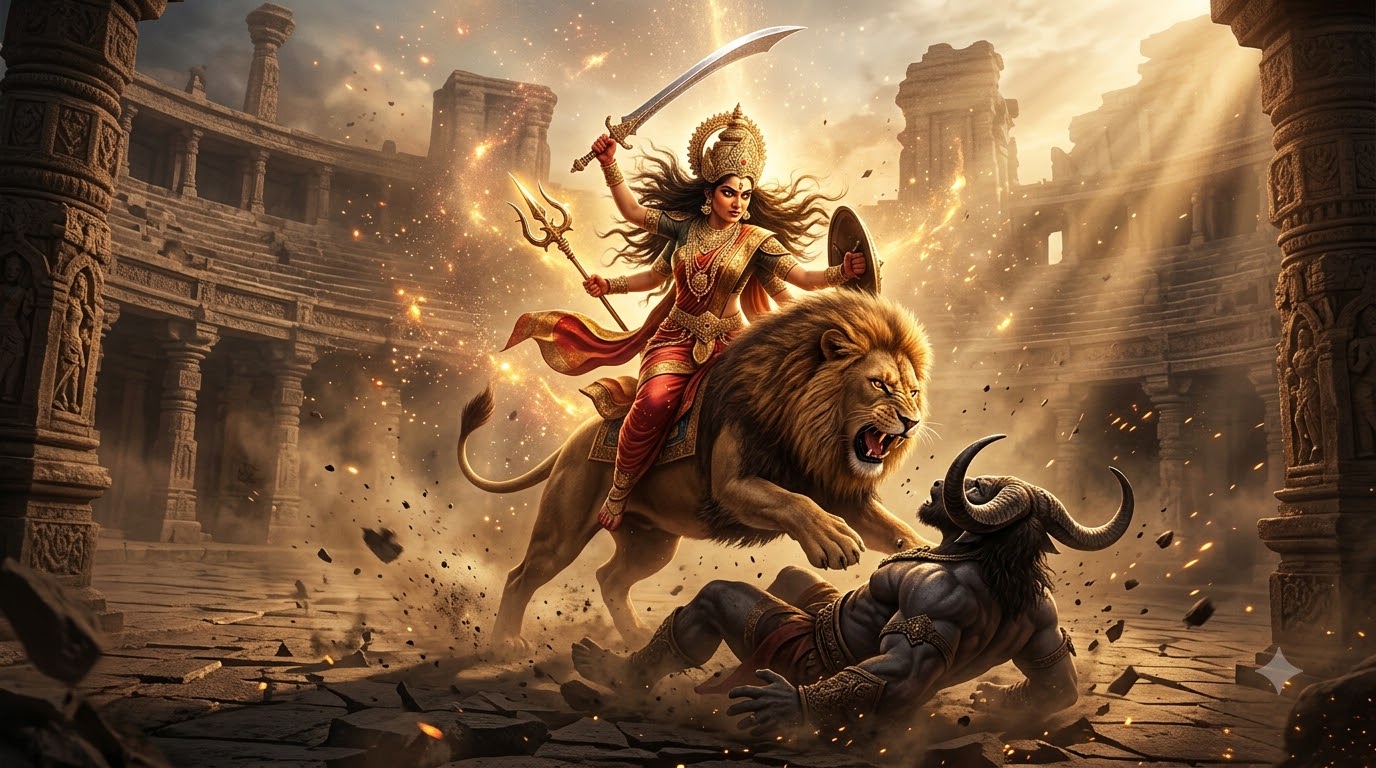
चन्द्रहासोज्ज्वलकरा शार्दूलवरवाहना।
कात्यायनी शुभं दद्याद्देवी दानवघातिनी॥

Translation: May Goddess Katyayani, who holds a gleaming sword, rides a magnificent lion, and destroys demons, grant me auspiciousness.
- Kalaratri: The dark night, representing the destruction of ignorance and fear.
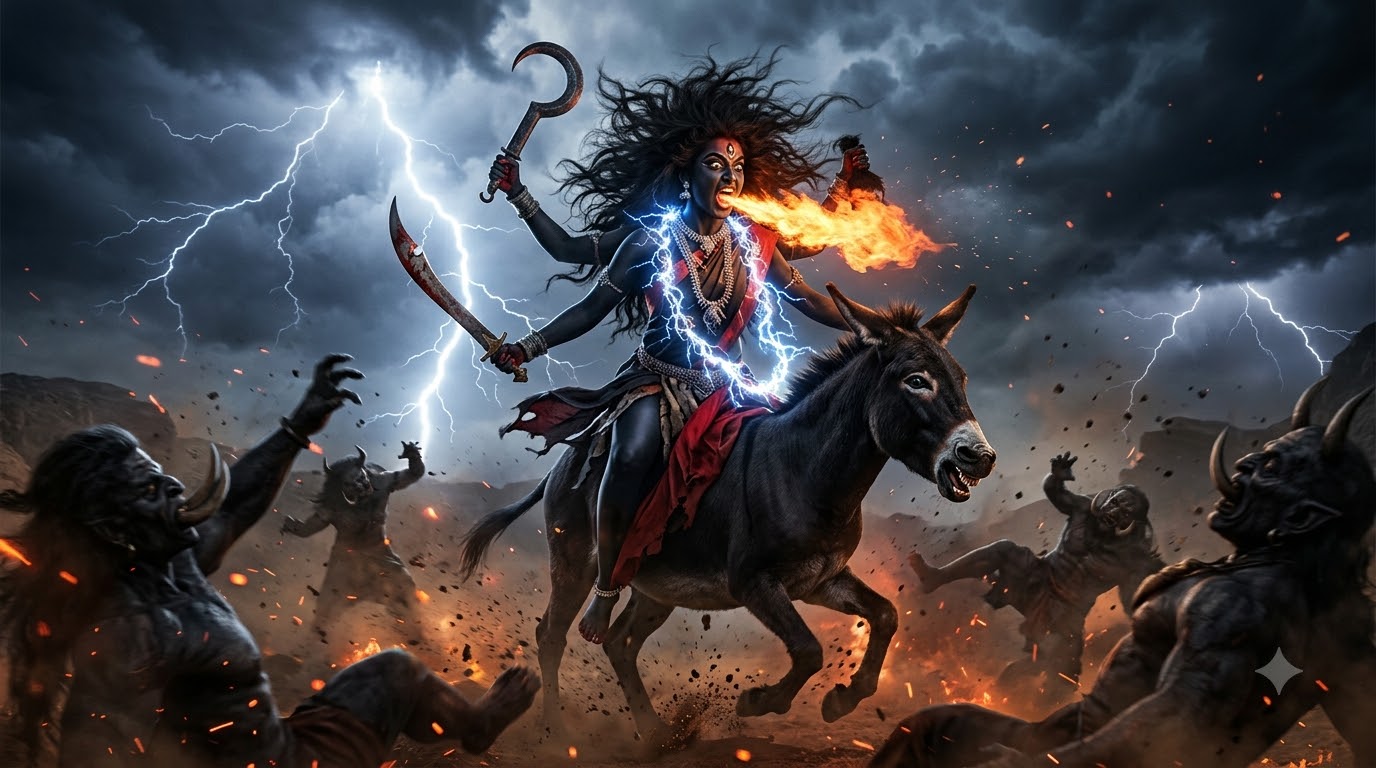
एकवेणी जपाकर्णपूरा नग्ना खरास्थिता।
लम्बोष्ठी कर्णिकाकर्णी तैलाभ्यक्तशरीरिणी॥

Translation: May the fierce Kalaratri, who has a single braid, wears japa flowers in her ears, is unclothed, rides a donkey, has long lips, and whose body is smeared with oil, remove our fears.
- Mahagauri: The radiant and serene goddess, signifying purity and peace.
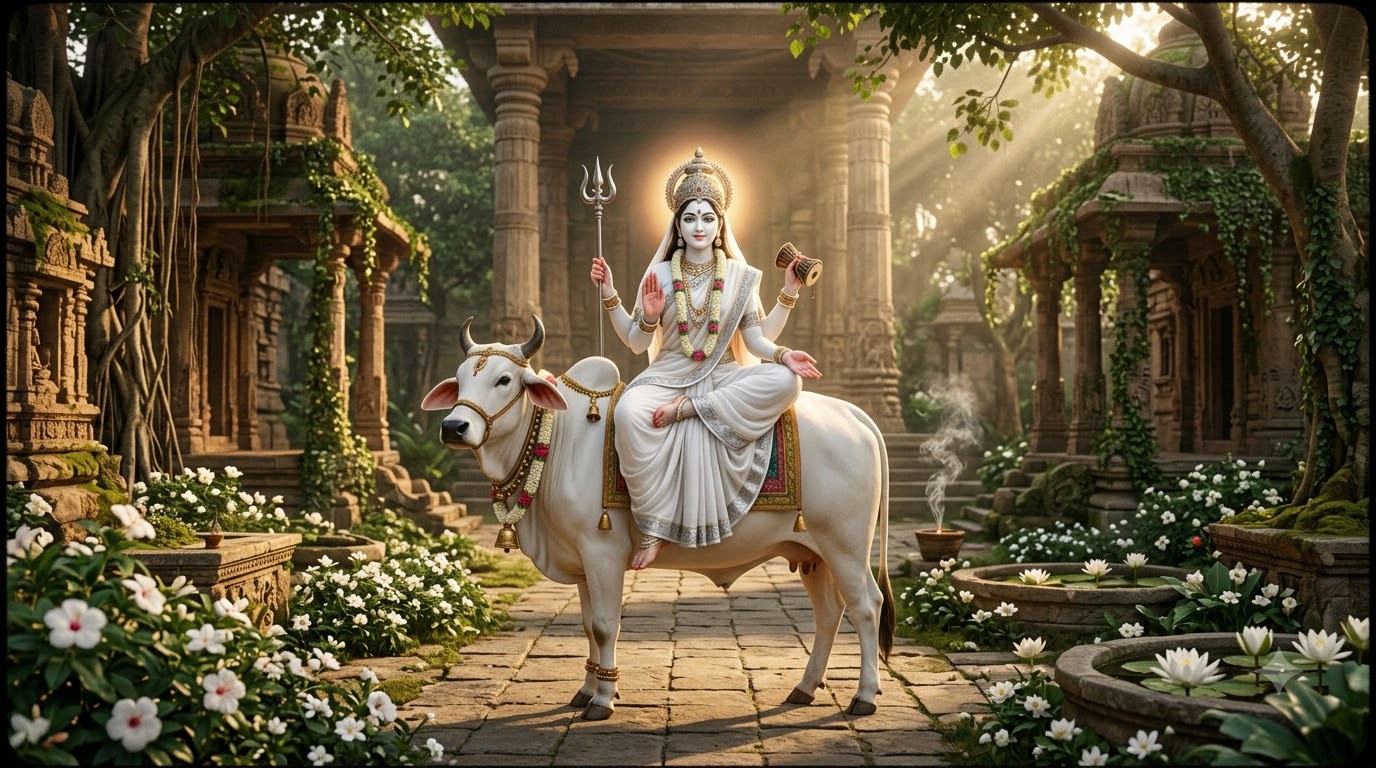
श्वेते वृषे समारूढा श्वेताम्बरधरा शुचिः।
महागौरी शुभं दद्यान्महादेवप्रमोददा॥

Translation: May the pure Goddess Mahagauri, who rides a white bull, wears white garments, and brings joy to Mahadeva, grant me auspiciousness.
- Siddhidatri: The bestower of supernatural powers and spiritual enlightenment.
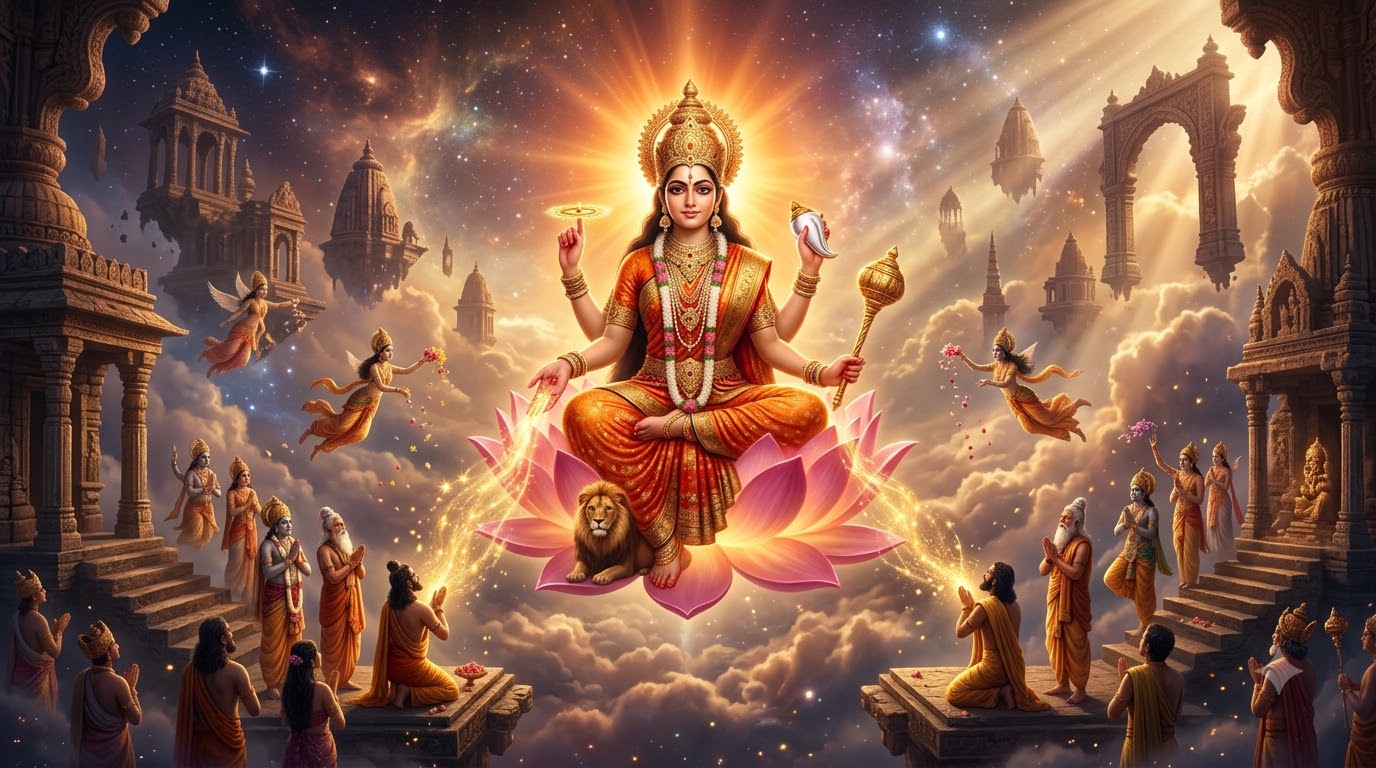
सिद्धगन्धर्वयक्षाद्यैरसुरैरमरैरपि।
सेव्यमाना सदा भूयात् सिद्धिदा सिद्धिदायिनी॥

Translation: May the Goddess Siddhidatri, who is always served by Siddhas, Gandharvas, Yakshas, Asuras, and Devas, bestow all perfections upon me.
What the evidence shows
Historically, the worship of the Goddess (Shaktism) has ancient roots in the Indian subcontinent. Terracotta figurines from the Indus Valley Civilization suggest an early focus on a mother goddess, though direct continuous links to the Puranic Durga are difficult to substantiate archaeologically.
The textual codification of Durga as the supreme reality primarily emerges with the Devi Mahatmya (circa 5th-6th century CE). Anthropological evidence suggests that the modern Durga incorporates various localized, indigenous goddesses who were eventually synthesized into a single, supreme pan-Indian deity.
Where experts disagree
Scholars debate the exact origins of the Navadurga concept. While traditionalists view the nine forms as eternally distinct manifestations described in the agamas and puranas, historians argue that this is a classic example of syncretism. Some experts propose that distinct regional goddesses were grouped into a standardized set of nine to fit the culturally significant nine-day autumn festival (Sharad Navratri).
Furthermore, the integration of tribal deities into the Brahminical fold—such as the association of the goddess with mountains (Shailaputri) and the lion mount—is seen by some sociologists as a historical process of assimilating indigenous cultures.
What we still don't know
We do not know the precise chronological sequence of how the local goddesses merged into the singular concept of the Navadurga. The exact period when the Devi Mahatmya was composed remains a broad estimate, and the historical identity of the tribes or groups that first worshipped the buffalo-demon slayer archetype is still shrouded in antiquity.
Sources
- Coburn, Thomas B. Devi Mahatmya: The Crystallization of the Goddess Tradition. Motilal Banarsidass, 1988.
- Kinsley, David. Hindu Goddesses: Visions of the Divine Feminine in the Hindu Religious Tradition. University of California Press, 1988.
- Bhattacharyya, N. N. History of the Sakta Religion. Munshiram Manoharlal Publishers, 1996.
Evidence Labels
More like this
Navratri Day 1: Maa Shailaputri, the Mountain Daughter and Root Consciousness
The first night of Navratri honors Shailaputri: daughter of the Himalayas, rider of the bull Nandi, and embodiment of Muladhara root energy.
Navratri Day 9: Maa Siddhidatri, the Fount of Perfections and the Non-Dual Summit
The ninth night of Navratri (Maha Navami) honors Siddhidatri: the bestower of all mystical perfections from whom Lord Shiva derived Ardhanarishvara.